
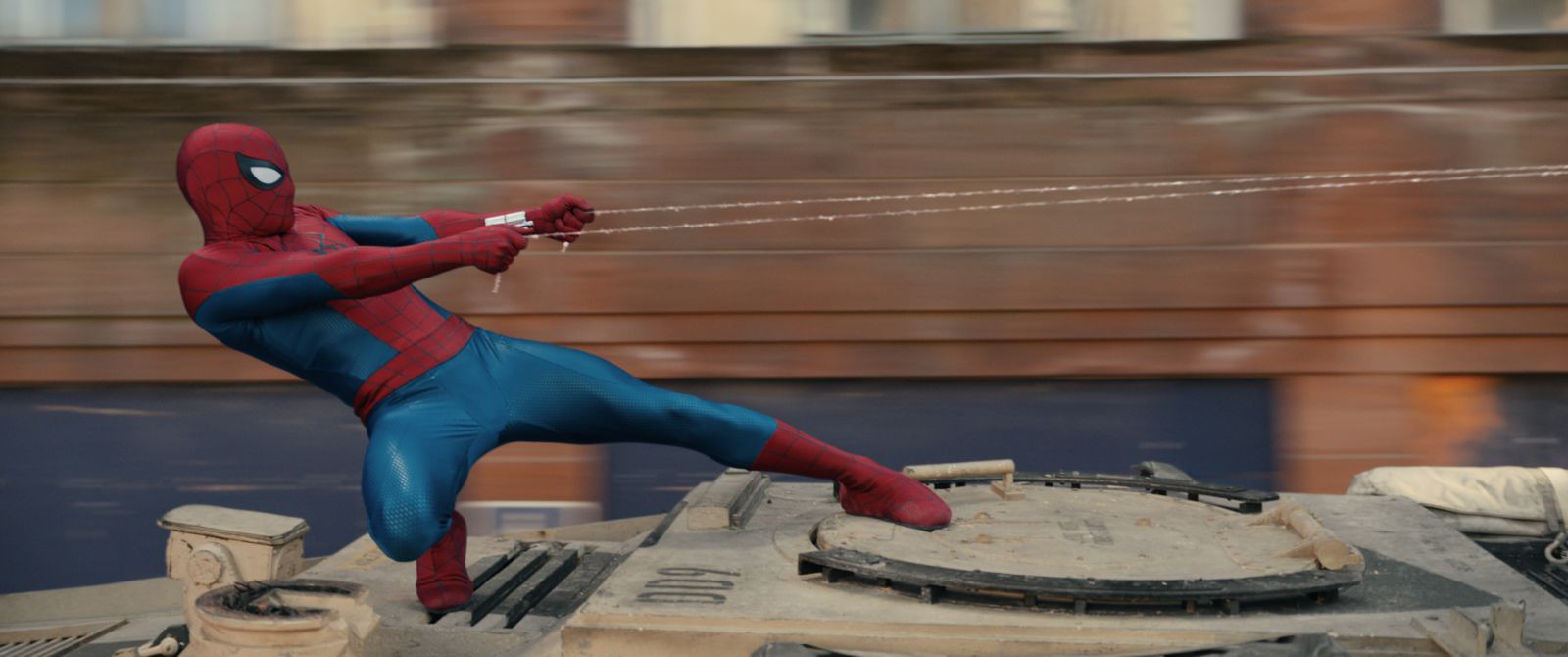
Spider‑Man: Brand New Day, the newest entry in the Spider‑Man saga fronted by Tom Holland, Zendaya and Jacob Batalon, Tramell Tillman, Zabryna Guevara,Michael Mando, Marisa Tomei, Florence Pugh, Mark Ruffalo, Liza Colón-Zayas, Olivia Booth-Ford, Marvin Jones III. , backed by Sony Pictures, Columbia Pictures and Marvel Studios with producers Amy Pascal and Kevin Feige overseeing the project.
We re‑enter the story at the point No Way Home left behind: a splintered multiverse, villains pulled from alternate realities, brutal bereavement and the unforgettable appearance of Doctor Strange alongside three incarnations of Spider‑Man – Tobey Maguire, Andrew Garfield and Tom Holland. To repair the chaos in time and space and ward off further threats, the world was forced to forget Spider‑Man, which meant erasing Peter Parker from everyone’s memory.
Helmed by Destin Daniel Cretton and scripted by Chris McKenna, Erik Sommers and Justin Kuritzkes, Brand New Day uses this narrative reset to rebuild Peter Parker for a new phase. Rather than clinging to the familiar, the film leans into the idea that the character must change, allowing this instalment to push him into different emotional and moral territory.
A stripped‑back Spider‑Man and an imposing Scorpion
This time Peter is genuinely isolated: juggling college life while fending off fresh dangers tearing through New York. The most striking new adversary is Scorpion, played with considerable flair by Michael Mando. His interpretation gives the character a distinctive physicality and an unsettling presence, making Scorpion feel like a tangible menace rather than a throwaway foe.
Casting choices
The casting extends well beyond the familiar faces. One of the most intriguing additions is Sadie Sink, the breakout star of Netflix’s Stranger Things, who finally steps into the MCU. Without revealing her role, it’s clear that her character brings an unexpected emotional colour to the film. Sink once again proves she can inhabit a persona far removed from the one audiences have watched her grow into over the past decade.
The film also folds in Jon Bernthal as the Punisher and Mark Ruffalo as Bruce Banner/The Hulk, integrating them into Peter’s story in ways that feel organic rather than tokenistic. Watching an Avenger grapple with a seemingly ordinary day, and an anti‑hero like the Punisher moving through moral shadow, alongside Holland’s Spider‑Man anchors the narrative in a street‑level reality.
Together, they reshape Peter’s journey: the Punisher, operating in the midst of corruption yet stepping up as an unlikely ally, forces Peter to confront what his core gift really is – not just physical prowess, but a capacity for ethical resolve when everything around him blurs.
Florence Pugh’s new Black Widow also joins the investigation, partnering with Spider‑Man as he tries to trace the pattern behind a wave of escalating threats in New York. Her scenes with Holland are tight and charged, making clear just how far Peter has travelled from the enthusiastic schoolboy of Homecoming.
Screenplay
Narratively, Spider‑Man: Brand New Day rests on a solid three‑act structure. The film feels fresher, more grounded and unmistakably more mature than earlier episodes. University life brings a different kind of pressure – deadlines, solitude, financial strain and anonymity – all layered on top of the usual demands of saving the city.
Importantly, the script commits to the classic rule of “Show, don’t tell”. Key emotional beats are expressed through images, gestures and framing rather than spelled out in dialogue. Peter’s isolation, his growth and his doubts are all communicated by what we see him do and where we find him, not by what he explains.
Direction
Coming off Shang‑Chi and the Legend of the Ten Rings, Destin Daniel Cretton delivers another assured piece of genre cinema that marries large‑scale action with intimate character work. The action sequences are energetic yet coherent, the stunt work feels carefully staged rather than over‑cut, and Spider‑Man’s movement through the frame serves as character storytelling as much as simple display of power.
Visually, the film carves out a recognisable identity. The cinematography gives New York a colder, more winter‑bound look that fits the theme of a hero enduring his harshest season. Cretton’s choices suggest a director with a clear plan: he knows when to pull back and when to push into close‑ups that lock us into Peter’s perspective.
Digital effects are deployed with restraint. The CGI doesn’t smother the action, but instead heightens key beats and lends credibility to the multiverse elements while preserving spatial clarity. In several moments, the visual effects arguably exceed what earlier Spider‑Man films achieved, particularly in how they dovetail with practical stunts and on‑location work.
Comic influences
Fans of the comics will recognise that Brand New Day is steeped in Spider‑Man’s publishing history. The film draws inspiration from:
- The Amazing Spider‑Man #100–102
- The Other: Evolve or Die (2005–2006)
- Spectacular Spider‑Man
- The X‑Men #1 (1963)
- X‑Men #22 (1966)
- X‑Men #136 (1980)
These threads are more than simple nods; they underpin the film’s depiction of power, mutation and moral struggle, placing Peter’s evolution inside a broader mythos that now encompasses X‑Men, the Fantastic Four and the expanding multiverse.
Setting the stage for Avengers: Doomsday and Secret Wars
In the wider MCU, Spider‑Man: Brand New Day functions as an important stepping stone towards the franchise’s next chapter. To fully grasp the trajectory of these characters, audiences will have to wait for Avengers: Doomsday and Secret Wars. Yet with X‑Men, the Fantastic Four and a growing roster of grounded heroes now circling the story, this film gives us enough hints to sketch where the saga may be heading.
Spider‑Man: Brand New Day is playing in cinemas – and it earns a trip to the biggest screen you can find.
Rating: 4.5
